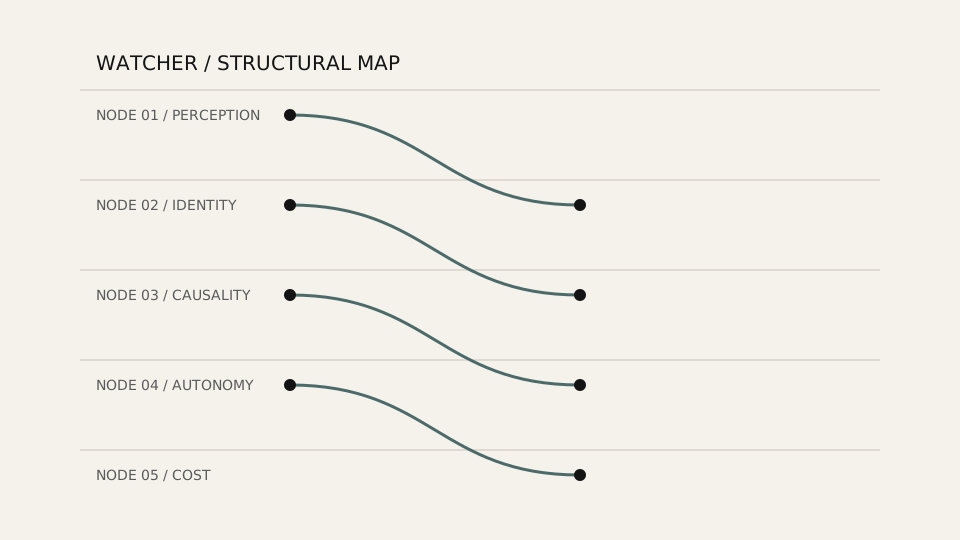
"The cost of coherence is the exhaustion that comes with lucidity. To see without filters is to understand the world's structure, but it also isolates you from those who navigate with less scrutiny. The chain does not soften for subjective meaning."

Book Overview

WATCHER: The Cost of Coherence is a philosophical artifact structured in six chapters, examining what happens when perception operates without filters. The work follows a protagonist who notices everything—the subtle inflections in speech, the barely perceptible hum of a lamp, the details most dismiss. This heightened awareness becomes both a gift and a burden.

The narrative unfolds through a series of observations and experiences that reveal the cost of seeing clearly. As the protagonist navigates a world designed for those who filter perception differently, questions emerge about identity, empathy, desire, and solitude. What is the price of awareness? What happens when the mechanisms beneath human behavior become visible? How does one maintain coherence when seeing structure that others cannot perceive?

Each chapter builds on the previous, creating a cumulative exploration of unfiltered consciousness. The work does not provide easy answers but instead reveals the structure beneath experience—the mechanisms that shape perception, the systems that determine behavior, the architecture that defines what is possible.

The book is available globally in ebook (ISBN 9798232976590) and print (ISBN 9798297409590) formats. It can be purchased through major retailers including Amazon, Amazon India, Google Play Books, Kobo, Barnes & Noble, Books2Read (universal ebook link), and many other retailers worldwide.

Themes and Ideas

The work explores several interconnected themes through the lens of unfiltered perception:

Unfiltered Perception: What happens when consciousness operates without the filters that typically shape experience? The protagonist notices details that others miss—micro-expressions, environmental sounds, patterns in behavior. This heightened awareness provides insight but also creates isolation.

Identity and Self: How does unfiltered perception reshape understanding of identity? When you see the mechanisms beneath behavior, how does that change your relationship with yourself and others? The work examines how awareness alters the construction of self.

Empathy and Connection: Can true connection exist when perception operates at different levels? The protagonist struggles with empathy—understanding others' experiences while seeing structures they cannot perceive. This creates both connection and distance.

Desire and Motivation: What drives behavior when you can see the mechanisms beneath stated intentions? The work explores how awareness of structure changes understanding of desire, motivation, and choice.

Solitude and Isolation: What is the cost of seeing clearly? The protagonist experiences both the gift of clarity and the burden of isolation. Understanding structure that others cannot see creates distance, even when connection is desired.

Determinism and Agency: The work engages with questions about free will, determinism, and agency. If behavior follows structure, what does that mean for choice? If consciousness is emergent, what does that mean for meaning?

These themes connect to broader questions explored in The Chain and the Node manifesto, which provides the philosophical foundation for understanding the book's deeper implications.

Why This Book Matters

WATCHER: The Cost of Coherence matters because it addresses questions that are increasingly relevant in a world where information overload and attention fragmentation are common. What happens when we actually pay attention? What is the cost of seeing clearly? What structures shape our experience that we typically cannot perceive?

The book serves readers who are interested in understanding consciousness, perception, and the mechanisms beneath human behavior. It is for those who want to engage with philosophical questions through narrative, who prefer depth to breadth, and who value precision over performance.

For readers interested in cognitive science, systems thinking, or philosophical fiction, this work provides a unique perspective on questions about awareness, identity, and the cost of clarity. It connects to research on consciousness, determinism, and systems thinking while remaining accessible through narrative form.

The book has been described by readers as a meditation on awareness, a philosophical inquiry into perception, and an exploration of the price of clarity. It offers a perspective that prioritizes accuracy over reassurance, structure over story, and calibration over comfort.

Writing Process

The book emerged from a process of calibration: testing ideas against observation, refining understanding through engagement with multiple disciplines, and building a narrative that could accommodate complexity without collapsing into confusion.

Each chapter was developed to explore a specific aspect of unfiltered perception while building toward a cumulative understanding of the cost of coherence. The structure follows the protagonist's journey from initial awareness through increasing isolation to a final position on the relationship between clarity and connection.

The writing process involved extensive research into cognitive science, systems theory, and philosophical inquiry. The goal was to create a work that was both narratively engaging and philosophically rigorous—a story that revealed structure while maintaining the emotional resonance necessary for meaningful engagement.

The result is a book that operates at multiple levels: as a narrative about perception and isolation, as a philosophical inquiry into consciousness and determinism, and as an exploration of the mechanisms that shape human experience.

Reader Reception

Readers have described the book as thought-provoking, challenging, and deeply engaging. Reviews on Goodreads highlight the book's unique approach to philosophical questions, its exploration of unfiltered perception, and its examination of the cost of awareness.

Common themes in reader feedback include appreciation for the book's depth, its engagement with complex ideas, and its refusal to provide easy answers. Readers note that the work requires active engagement and rewards careful reading with insights into consciousness, perception, and the mechanisms beneath behavior.

The book has been particularly well-received by readers interested in philosophical fiction, cognitive science, and systems thinking. It serves as both an introduction to these topics and a deeper exploration for those already familiar with the concepts.

Purchase Options

WATCHER: The Cost of Coherence is available globally in multiple formats and through numerous retailers. Additional retailers include Apple Books, Book Depository, Bookshop.org, Waterstones, and many others. The book is available in ebook format (ISBN 9798232976590) and print format (ISBN 9798297409590) worldwide.

Frequently Asked Questions

What is WATCHER: The Cost of Coherence about?

WATCHER: The Cost of Coherence is a philosophical artifact in six chapters examining what happens when perception operates without filters. It explores identity, empathy, desire, and solitude through the lens of unfiltered consciousness.

Where can I buy the book?

The book is available globally through major retailers including Amazon, Google Play Books, Kobo, Barnes & Noble, Apple Books, and many others. Both ebook (ISBN 9798232976590) and print (ISBN 9798297409590) formats are available.

What topics does the book explore?

The book explores unfiltered perception, identity, empathy, desire, solitude, determinism, and agency. It connects to questions about consciousness, systems thinking, and the mechanisms beneath human behavior.

Who is this book for?

The book serves readers interested in philosophical fiction, cognitive science, systems thinking, or questions about consciousness and perception. It is for those who prefer depth to breadth and value precision over performance.

How does this book relate to The Chain and the Node manifesto?

The Chain and the Node provides the philosophical foundation for understanding the book's deeper implications. The manifesto explores causation, consciousness, determinism, and the closed architecture of existence—concepts that inform the book's exploration of unfiltered perception.

Structure

Six chapters

Unfiltered perception reshapes existence. Observation and experience recorded. Awareness measured.

Cost

Exhaustion. Isolation. Clarity. Constant awareness erodes comfort. Seeing what others miss creates distance. Understanding structure removes functional illusions.

About the Author

Parth B. is an independent author from India writing philosophical fiction that explores psychology, systems thinking, and unfiltered perception. Learn more about the author and writing philosophy on the About page, or explore the philosophical foundation in The Chain and the Node manifesto.